

Every teenager faces moments when words just don’t come out right. That’s where art therapy activities for teens step in. Instead of sitting across from a therapist and talking, teens use colors, shapes, and creative tools to say what they feel. It sounds simple, but the results can be life-changing.
Research consistently shows that making art lowers stress hormones, calms the nervous system, and helps young people understand their own emotions better. Whether a teen is dealing with anxiety, school pressure, or family struggles, art therapy activities for teens give them a safe, non-judgmental space to heal and grow.
How Art Therapy Transforms Adolescent Mental Health and Emotional Resilience
Adolescence is one of the most emotionally intense periods of life. The brain is still developing, hormones are shifting, and social pressure is everywhere. Art therapy meets teens right where they are. It reduces emotional overwhelm, builds emotional regulation skills, and teaches young people how to bounce back from setbacks. Many teens who struggle to open up in traditional therapy find it much easier to express themselves through drawing, painting, or sculpting.
The Science Behind Creative Expression for Teen Wellness
When a teen picks up a paintbrush or starts sketching, their brain enters a focused and calming state. Studies published by the American Art Therapy Association show that creative activities lower cortisol- the main stress hormone- while increasing dopamine, the brain’s feel-good chemical.
This is not just “keeping busy.” It is a real neurological shift. Creative expression also activates the prefrontal cortex, which is the part of the brain responsible for decision-making and emotional control.
This is why teens who practice art regularly often become better at handling conflict and pressure. For deeper reading, the American Art Therapy Association offers free resources on how art-based practices support teen brain development.
Why Traditional Talk Therapy Alone Isn’t Always Enough
Talk therapy is powerful, but some teens shut down when asked to verbalize their feelings. Language-based therapy relies on a teen being able to name and describe their emotions, which is a skill many adolescents are still developing.
Art bypasses this barrier. It lets the subconscious speak. A teen might not be able to say “I feel invisible at school,” but they might paint a tiny figure surrounded by darkness. That image opens a door that words alone couldn’t unlock. Art therapy does not replace talk therapy; it strengthens it.
Art Therapy Activities That Build Emotional Regulation Skills
Learning to manage big emotions is one of the most valuable life skills a teen can develop. Adolescent wellness programs that include art-making give teens practical tools they can use whenever they feel overwhelmed. Instead of bottling feelings up or acting out, they can channel energy into something constructive and meaningful. The following activities are commonly used in structured therapy settings.
Using Color and Movement to Process Difficult Feelings
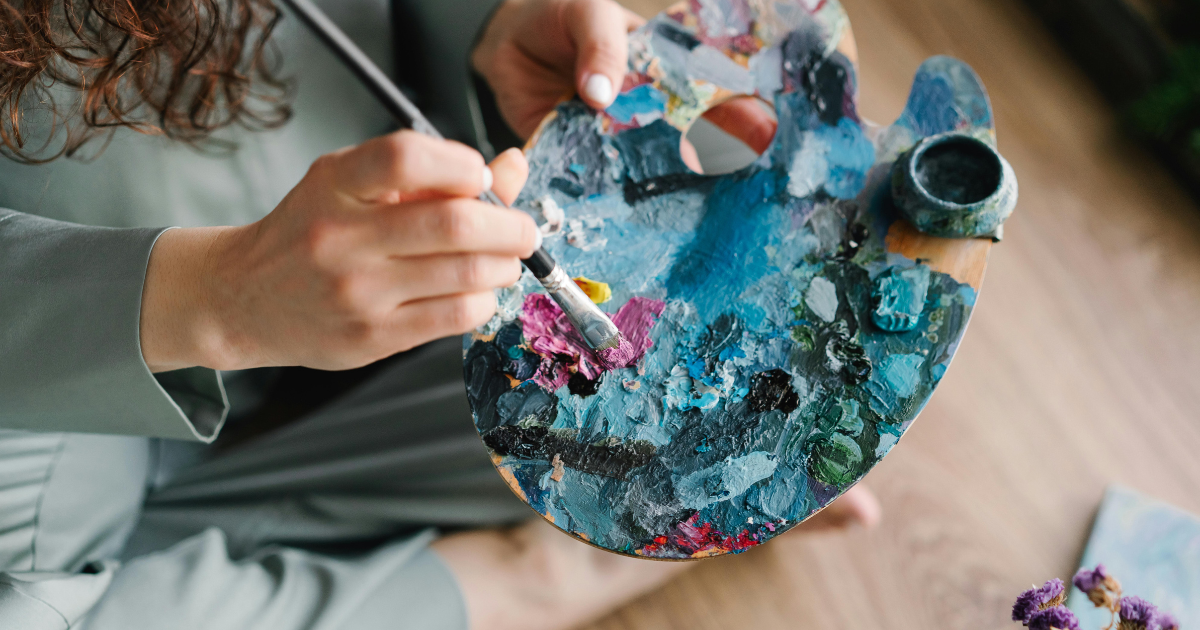
Color is one of the most direct ways to express emotion. Therapists often ask teens to “paint how you feel today” without any instructions on what to create. The results are deeply personal. Teens naturally reach for red when they are angry, blue when they are sad, or bright yellow when they feel hopeful.
Movement- large, sweeping brushstrokes versus tight, controlled marks- also reflects internal emotional states. Stress relief through color and movement art is fast, accessible, and does not require any artistic talent to be effective.
Creative Expression as a Pathway to Self-Discovery in Adolescence
Teenagers are in the middle of figuring out who they are. Art gives them a mirror. When a teen creates something, they make hundreds of small choices – what colors to use, what shapes feel right, what story to tell.
Each choice reflects something real about their personality, values, and desires. Over time, these creative choices add up to a portrait of the self that is clearer and more grounded. Here are key ways creative expression supports self-discovery in teens:
- Journaling with sketches helps teens connect daily experiences to deeper emotional patterns.
- Creating self-portrait collages encourages teens to explore multiple sides of their identity.
- Making vision boards helps teens clarify goals and what truly matters to them.
- Abstract painting sessions allow teens to express emotions they have no words for yet.
- Photography projects help teens document and reframe how they see their world.
Breaking Through Communication Barriers With Visual Art
For teens who are introverted, neurodivergent, or dealing with past trauma, verbal communication can feel exhausting or unsafe. Visual art removes the pressure of having to perform emotionally in front of another person. A teen can work on a piece alone, then share it when they feel ready.
This gradual process builds trust- both with the therapist and with themselves. Many therapists note that teens who are resistant to traditional therapy engage much more willingly when art is introduced.
How Artistic Creation Reduces Anxiety and Stress Responses
When a teen is in the middle of making something, their body’s stress response quiets down. Heart rate slows. Breathing deepens. Racing thoughts settle. This is the same physiological response triggered by mindfulness meditation, and art creates it naturally.
Anxiety management through art is especially effective because it is active – teens are doing something with their hands, which gives nervous energy a healthy outlet. Even 20 minutes of focused art-making can produce measurable reductions in anxiety symptoms, according to research from Drexel University.
Therapeutic Art Techniques for Managing Adolescent Stress and Overwhelm
Not all therapeutic art techniques are the same. Different approaches work better for different teens depending on their personality, comfort level, and what they are going through. Below is a quick guide to some of the most effective methods used in professional settings:
| Technique | Best For | Mental Health Benefit |
| Mandala Drawing | Anxiety, racing thoughts | Calms the nervous system |
| Clay Sculpting | Anger, emotional buildup | Physical release of tension |
| Collage Making | Identity struggles, low confidence | Builds sense of self |
| Watercolor Painting | Depression, emotional numbness | Reconnects with emotions |
| Journaling with Art | Stress, daily overwhelm | Promotes reflection and clarity |
Building Confidence and Identity Through Creative Projects
One of the quietest but most powerful benefits of art therapy is what it does for a teen’s confidence. When a teen finishes a project- even something small like a painted rock or a collage – they feel a sense of accomplishment.
That feeling matters. It tells them: I made something. I followed through. I have something to show. Over time, this builds real self-esteem that carries into school, friendships, and daily life.
The National Institute of Mental Health notes that building mastery in any skill area is a key component of treating adolescent depression. Art gives teens a mastery experience that is accessible, low-pressure, and personally meaningful.
Using Mixed Media to Process Trauma and Difficult Emotions
Mixed media art – combining paint, paper, fabric, photographs, and found objects – is especially effective for teens who have experienced trauma. It allows them to externalize their inner world in a way that feels safe and contained. A teen might tear up old photographs and paste them into a new design, symbolically reshaping painful memories.
They might layer paint over words that once hurt them. This kind of therapeutic art does not require talking about trauma directly. Instead, it allows the teen to process it at their own pace, in their own language, with the full support of their therapist.
Integrating Art Therapy Into Your Teen’s Mental Health Routine at Teen Mental Health Texas
If you are a parent who has watched your teen struggle and felt helpless, know that real support exists. At Teen Mental Health Texas, we offer compassionate, evidence-based care that meets teens where they are. Our programs use art therapy activities for teens alongside individual therapy, group work, and family support to create a full picture of healing.
We believe that every teen deserves a space where they feel understood- not just talked at. Whether your teen is dealing with anxiety, depression, trauma, or just the everyday stress of growing up, our team is ready to help. Reach out to us today and take the first step toward a healthier, happier future for your teen. Visit us.
FAQs
-
Can art therapy activities actually reduce anxiety symptoms in teenagers faster than talking alone?
Yes, art therapy reaches the brain’s emotional centers faster than words alone can. Creating art lowers cortisol and activates calming neural pathways quickly. Many teens feel noticeably calmer after just one focused art session.
-
What specific art materials work best for helping teens regulate intense emotions?
Clay and play-dough are great for releasing anger and physical tension effectively. Watercolors work well for sadness, while bold markers suit teens with high energy. Soft pastels and fabric textures are best for teens needing sensory comfort.
-
How long does it take for teens to see confidence improvements through creative projects?
Most teens begin feeling a small sense of accomplishment after their very first finished piece. Consistent weekly sessions over four to six weeks typically show noticeable confidence improvements. Long-term practice, done over months, produces the most meaningful and lasting results.
-
Which therapeutic art techniques help teens process trauma without verbal discussion?
Collage, mixed media, and mask-making are among the most effective non-verbal trauma tools. They allow teens to externalize painful memories through imagery rather than spoken words. These techniques are widely used by licensed therapists specializing in adolescent trauma treatment.
-
How often should teens practice art therapy activities for optimal mental health benefits?
Research suggests that two to three art therapy sessions per week produce the strongest mental health results. Even short daily creative moments, like sketching for ten minutes, add up meaningfully. Consistency matters far more than the length or complexity of each individual session.