Skip to content


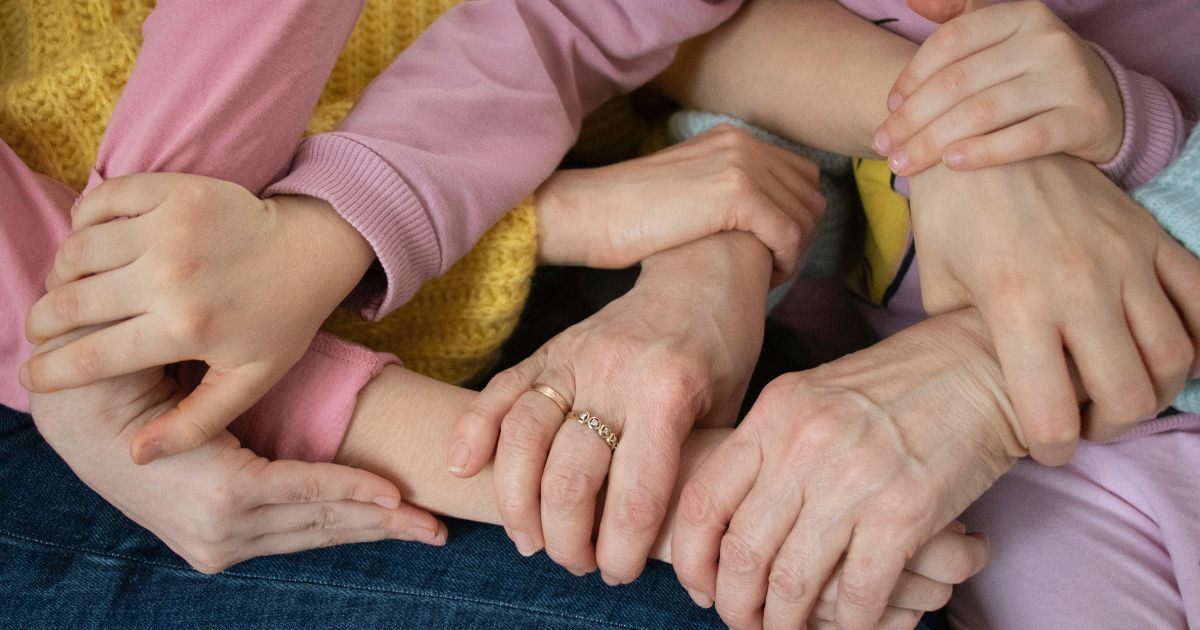
Somewhere between the last year of high school and the first years of adult life, a new psychological demand arrives — quieter than the identity crisis of mid-adolescence but no less urgent. It is the pressure to connect, to risk emotional closeness with another person and to build relationships that go deeper than shared classes or group chats. Erik Erikson named this challenge intimacy vs. isolation, and while he positioned it as the developmental work of young adulthood, its roots run directly through the teenage years—and its early struggles are playing out in the lives of adolescents right now in ways that mental health professionals are only beginning to fully reckon with.

What Intimacy vs. Isolation Actually Describes
Erikson’s intimacy vs. isolation stage is Stage 6 in his psychosocial framework, following the identity work of adolescence and preceding the generativity of middle adulthood. Its central question is deceptively simple: Can I share myself genuinely with another person without losing myself in the process? Intimacy, in Erikson’s framework, is not primarily about romantic or sexual connection—though those are expressions of it. It is about the capacity for genuine, mutual emotional closeness with another person: the ability to be known and to know another; to commit to relationships that require sustained vulnerability; and to do all of that without being so threatened by the closeness that you retreat into self-protective distance.
Isolation, the stage’s opposing pole, describes the outcome when that capacity is underdeveloped or unavailable. It is not simply being alone — a person can live surrounded by people and still experience the particular psychological isolation Erikson described. It is the experience of emotional distance that persists regardless of physical proximity, of relationships that remain safely superficial because genuine closeness feels either impossible or too dangerous to risk. Teen loneliness and mental health research have identified this distinction as clinically significant: social loneliness (a lack of company) is distressing, but emotional loneliness—the isolation of feeling unseen and unknown even in the presence of others—is more durably harmful.
Why This Stage Begins in Adolescence
Erikson placed intimacy vs. isolation in young adulthood, approximately spanning the late teens through the thirties, but the developmental groundwork for this stage is laid squarely during adolescence. The identity consolidation that happens in Stage 5—the work of figuring out who you are is the prerequisite for Stage 6, because genuine intimacy requires a self secure enough to be shared. A teenager who has not yet developed a stable sense of identity cannot fully navigate the intimacy challenge, but they are already encountering its early edges in every deep friendship, first romantic relationship, and moment of emotional vulnerability with a peer.
Intimacy, Identity and the Teen Connection
Identity and intimacy in adolescence are not sequential achievements—they are deeply intertwined processes that inform each other continuously. A teenager working through identity questions uses intimate relationships as mirrors and testing grounds, checking their emerging sense of self against how they feel and behave in close relationships. At the same time, the quality of their intimate relationships feeds back into identity development—shaping how they understand themselves, what they value, and what kind of person they want to become.
Romantic relationships in adolescence are often the first arena where the intimacy challenge becomes conscious and urgent. First relationships carry psychological weight that goes well beyond their apparent stakes because they represent a teenager’s earliest attempts to share themselves genuinely with a peer—to be vulnerable, to make themselves known and to risk the rejection that real closeness always includes as a possibility. How those earliest experiences go, and what support teens receive in processing them, shapes the relational patterns they bring to every intimate relationship that follows.
Fear of Intimacy and What Produces It
Fear of intimacy in teens does not appear from nowhere. It is almost always traceable to earlier developmental experiences—unresolved Stage 1 mistrust, Stage 2 shame, Stage 3 guilt, or Stage 5 identity diffusion—that have left a teenager without the psychological foundation that genuine closeness requires. A teen who learned in infancy that vulnerability leads to disappointment, or in early childhood that their true self is embarrassing, or in adolescence that their identity is too uncertain to share confidently, will approach the intimacy challenge with anxiety, avoidance, or the particular kind of pseudo-intimacy that looks like closeness but maintains a careful emotional distance beneath the surface.
Emotional connection in teenagers that is genuine and mutual is genuinely developmental work—it requires risk, practice, inevitable hurt, and the gradual building of trust. When fear of intimacy is operating, teens often develop protective strategies that interfere with this work: keeping relationships deliberately shallow, becoming intensely enmeshed with one person while shutting everyone else out, or cycling rapidly through relationships to avoid the sustained vulnerability that deeper connection demands.
Intimacy vs. Isolation: Developmental Outcomes
| Dimension | Intimacy (Positive Resolution) | Isolation (Negative Resolution) |
| Core capacity | Genuine mutual closeness without self-loss | Emotional distance even within relationships |
| Relationship pattern | Deep, committed, reciprocally vulnerable | Superficial, avoidant or intensely enmeshed |
| Identity relationship | Secure enough self to share and remain intact | Too uncertain or fragile to risk genuine sharing |
| Response to vulnerability | Tolerated and valued as part of connection | Threatening; triggers withdrawal or shutdown |
| Mental health correlation | Associated with belonging, meaning, and well-being | Linked to loneliness, depression and emptiness |
| Teen expression | Close friendships; healthy romantic relationships | Social withdrawal, chronic loneliness, relational turbulence |
Social Isolation in Youth: A Growing Mental Health Crisis
Social isolation in youth was already a significant clinical concern before the social and educational disruptions of the early 2020s accelerated it dramatically. Research conducted in the years following those disruptions has documented unprecedented rates of loneliness, social disconnection, and relationship avoidance among teenagers and young adults—a generation whose critical intimacy-development years were spent navigating the particular combination of digital hyper-connection and genuine relational poverty that characterizes so much of contemporary adolescent social life.
Teen loneliness and mental health data are unambiguous in their directionality: chronic loneliness is not merely uncomfortable—it is a significant risk factor for depression, anxiety, substance use, and suicidal ideation. The mechanism is not mysterious. Human beings are fundamentally social organisms whose nervous systems require genuine relational connection to regulate effectively. A teenager whose intimacy development is arrested—whether by fear, by circumstance, or by the shallow substitutes that social media provides for real closeness—is running on a relational deficit that compounds over time.
Digital Connection and Its Limits
Social media and digital communication have not solved the intimacy problem—in many ways, they have deepened it. The curated, performance-oriented nature of most social media interaction is the opposite of the vulnerable, authentic self-disclosure that genuine intimacy requires. A teenager who has five hundred followers and three hundred daily interactions but no one they can call at midnight is experiencing exactly the isolation Erikson described—surrounded by apparent connection while starving for genuine closeness.
Emotional connection in teenagers that develops through screens is not categorically less real than in-person connection, but it is more easily maintained at a safe emotional distance that protects against the vulnerability genuine intimacy demands. Teens who develop their relational lives primarily online may arrive at young adulthood with impressive social networks and genuinely limited capacity for the face-to-face vulnerability that deep relationships require.

When Isolation Becomes a Clinical Concern
The normal adolescent experience includes periods of social withdrawal, friendship conflict, and the ordinary loneliness of transition. Social isolation in youth that warrants clinical attention differs in quality and duration from these normal variations. The following patterns suggest isolation has moved beyond developmental difficulty into something requiring professional support:
- Persistent social withdrawal lasting more than several weeks, accompanied by declining interest in previously enjoyed activities
- A consistent pattern of ending relationships before genuine closeness develops, often with rationalizations about others not being trustworthy
- Significant distress around intimacy attempts that is disproportionate to the actual relational risks involved
- Chronic feelings of emptiness or being fundamentally unknowable or unlovable that persist across contexts
- Depression or anxiety that is specifically triggered by relational closeness or the prospect of it
- Young adult relationship development that is significantly delayed or arrested compared to peers in ways that cause functional impairment
Supporting Healthy Intimacy Development: Strategies by Setting
| Setting | What Helps | What to Avoid |
| Home | Model genuine vulnerability and relational repair | Dismissing or pathologizing teen romantic relationships |
| School | Structured opportunities for authentic peer connection | Social environments that reward performance over authenticity |
| Therapy | Attachment-based work; building earned security | Focusing only on symptoms without addressing relational roots |
| Peer relationships | Support groups; close friendship cultivation | Digital substitution for in-person emotional connection |
| Extracurriculars | Team or collaborative activities requiring genuine cooperation | Purely competitive activities with no relational depth |
FAQs
1. What Age Does Intimacy vs. Isolation Occur?
Erikson’s intimacy vs. isolation stage is Stage 6 of his psychosocial framework, spanning roughly the late teens through the early thirties—what developmental psychology calls “young adulthood.” However, its early expressions begin clearly in adolescence, when teenagers start forming their first deep friendships and romantic relationships. The stage’s full resolution unfolds over many years, and the groundwork for how it resolves is heavily influenced by the identity development work that precedes it in Stage 5.
2. Can Isolation in This Stage Lead to Depression?
Yes, and the research is consistent and substantial. Teen loneliness and mental health studies repeatedly demonstrate that chronic isolation—particularly emotional isolation, the experience of being unknown and unseen even in social settings—is among the strongest predictors of adolescent depression. The pathway runs in both directions: isolation increases depression risk, and depression impairs the social functioning that would allow teens to pursue genuine connection. Breaking this cycle often requires professional support, since neither depression nor isolation typically resolves on its own once the pattern is established.
3. How Does Fear of Intimacy Affect Teen Romantic Relationships?
Fear of intimacy in teens produces recognizable patterns in romantic relationships: choosing partners who are emotionally unavailable, ending relationships precisely when they deepen, creating conflict that serves as an unconscious exit strategy, or maintaining intense surface-level connection while keeping the most genuine parts of the self carefully hidden. These patterns are protective adaptations to earlier relational experiences, not character flaws. Romantic relationships in adolescence can themselves become developmental opportunities when teens have support in recognizing and working through these patterns rather than simply repeating them.
4. Is It Normal for Teens to Prefer Being Alone Over Social Connection?
Introversion — a genuine preference for solitude and smaller social settings — is a normal and healthy personality trait that should not be confused with isolation. An introverted teenager who has a few close, genuine relationships, who can share themselves authentically with trusted people, and who finds solitude restorative rather than a refuge from threatening closeness is developing normally. Social isolation in youth becomes a clinical concern when aloneness is driven by fear, avoidance, or the conviction that genuine connection is impossible or too dangerous, rather than by genuine temperamental preference.
5. How Can Therapy Help a Teen Who Is Struggling With Isolation?
Therapy addresses intimacy vs. isolation struggles on multiple levels. Relationally, the therapeutic relationship itself provides a corrective experience of genuine, boundaried closeness — often the first relationship in which a teen has experienced being truly known without judgment. Clinically, therapy helps identify the earlier developmental roots of isolation—the unresolved trust, shame, or identity issues that make intimacy threatening—and works systematically to build the psychological safety that genuine closeness requires. Identity and intimacy in adolescence are so intertwined that therapeutic work on one almost always produces movement in the other.
Too Close to Call It Loneliness — Teen Mental Health Texas Is Here
The difference between a teenager who is lonely and a teenager who is developing the real capacity for connection is not always visible from the outside — but it is never beyond reach. Teen Mental Health Texas helps adolescents work through the relational fears, identity questions, and isolation patterns that keep genuine connection just out of reach. Reach out to Teen Mental Health Texas today and help your teen build the emotional foundation for relationships that are real, mutual, and genuinely sustaining.